Duck, Duck, Goose: How to Play, Where It Began and Gray Duck
When was Duck Duck Goose invented? A folklorist recorded it in 1894. The origin, the Minnesota "Gray Duck" version and the rules.
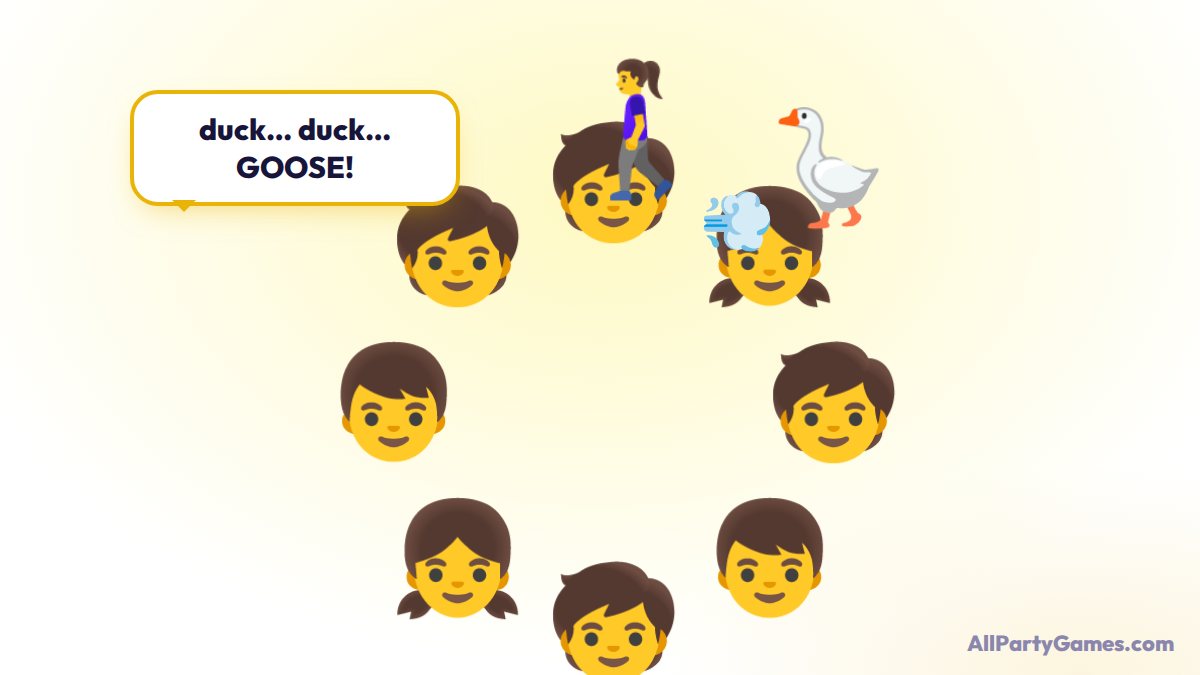
A circle of children, one walking around the outside tapping heads, and the electric moment when "duck" becomes "GOOSE!". Duck, Duck, Goose is the first chasing game most children ever play, and it is a lot older than the nursery it lives in.
Where does Duck, Duck, Goose come from?
The oldest clear description comes from the British folklorist Alice Gomme, who in 1894 documented a circle game in which "the picker touches the shoulder of each person in the ring with a handkerchief saying 'not you', 'not you', until the picker reaches the desired chaser". A 1919 American entertaining guide by Emily Rose Burt describes children joining hands in a circle while a "daisy picker" walks round saying "Daisy in the dell, I don't pick you… I do pick you". Somewhere between the handkerchief and the daisies, the birds arrived. A Swedish origin is sometimes suggested but unconfirmed. In much of Minnesota and parts of Wisconsin the game is Duck, Duck, Gray Duck: the picker calls out colours — green duck, purple duck, grape duck — and only "gray duck" starts the chase.
What you need
- A circle of four or more players and space to run around it.
- Optional: our Duck Duck Goose game master picks the walker at random, adds a surprise goose and times the chase, so the adult can join the circle.
How to play Duck, Duck, Goose
- Everyone sits in a circle facing inward. One player is the picker.
- The picker walks around the outside, tapping each head: "duck… duck… duck…"
- On "GOOSE!" the tapped player leaps up and chases the picker around the circle.
- The picker races to sit in the goose's empty spot. Make it, and the goose becomes the new picker.
- If the goose tags the picker first, the picker walks again (or sits in the middle — "the mush pot" — in some versions).
Rules that keep it safe
- Everyone runs the same direction around the circle.
- Tap heads gently — no slapping.
- No pulling legs out as the picker runs past.
- Play on grass or carpet, never near tables.
Variations
- Gray Duck — the colour-calling Minnesota version.
- Animal goose — the chase must be done as the animal called ("frog!").
- Drip, drip, drop — summer version with a cup of water.
- Surprise goose — the screen picks the goose so the picker cannot choose a friend every time.
Tips for hosts
- Cap the circle at twelve; run two circles for bigger groups.
- Use a chase timer (ten seconds) so slow chases do not stall the game.
- Make sure everyone is a goose at least once — the screen's random picker helps.
Play Duck Duck Goose now — free, no sign-up
Duck Duck Goose online helper: explains the circle game, picks who walks around, calls GOOSE with a surprise player option and runs a chase timer. Simple, loud and perfect for young kids.
Frequently asked questions
How old is Duck, Duck, Goose?
At least 130 years. In 1894 the folklorist Alice Gomme recorded a version in "The Traditional Games of England, Scotland and Ireland" in which the picker tapped shoulders saying "not you, not you", and a 1919 American book, Emily Rose Burt's "Entertaining Made Easy", describes a "daisy picker" version.
How do you play Duck, Duck, Goose?
Players sit in a circle facing inward while one player, the picker, walks around the outside tapping heads and saying "duck". When the picker says "goose", that player jumps up and chases the picker around the circle. If the picker reaches the empty spot first, the goose becomes the new picker.
What is Duck, Duck, Gray Duck?
The Minnesota variant. Instead of "goose", the picker calls colours — "green duck, purple duck, gray duck!" — and only gray duck starts the chase, which makes it a listening game as well as a running one.
What age is it for?
Three to eight is the classic range. It works for adults as an icebreaker if the room is big enough for a chase.